Conversational AI English tutor LAURA
Grammar Correction
Summary
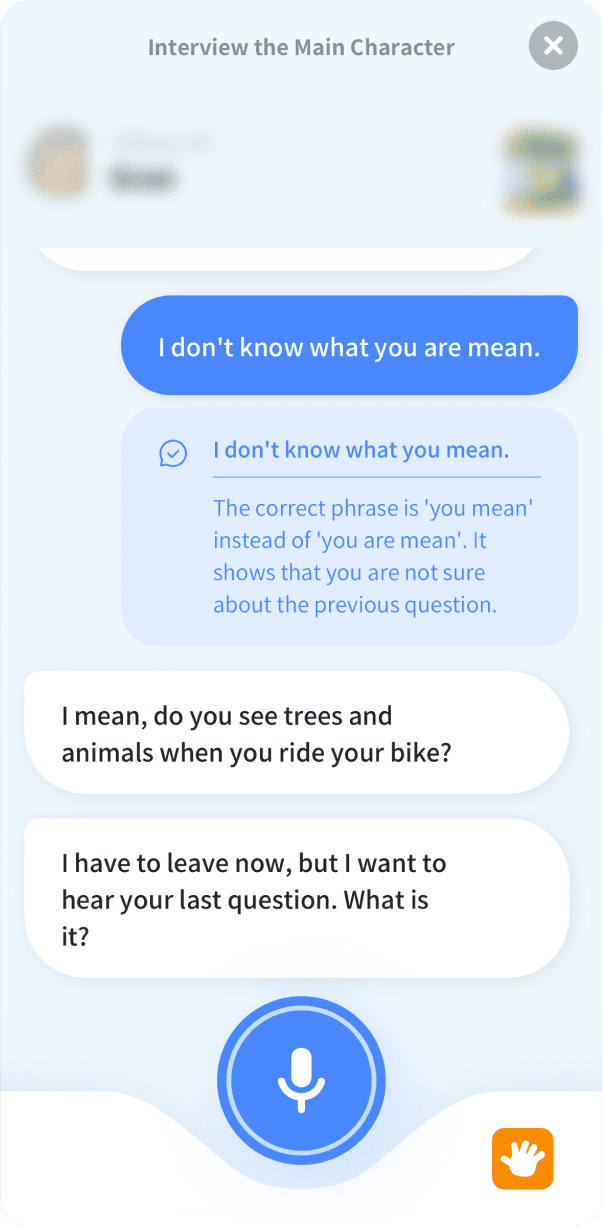
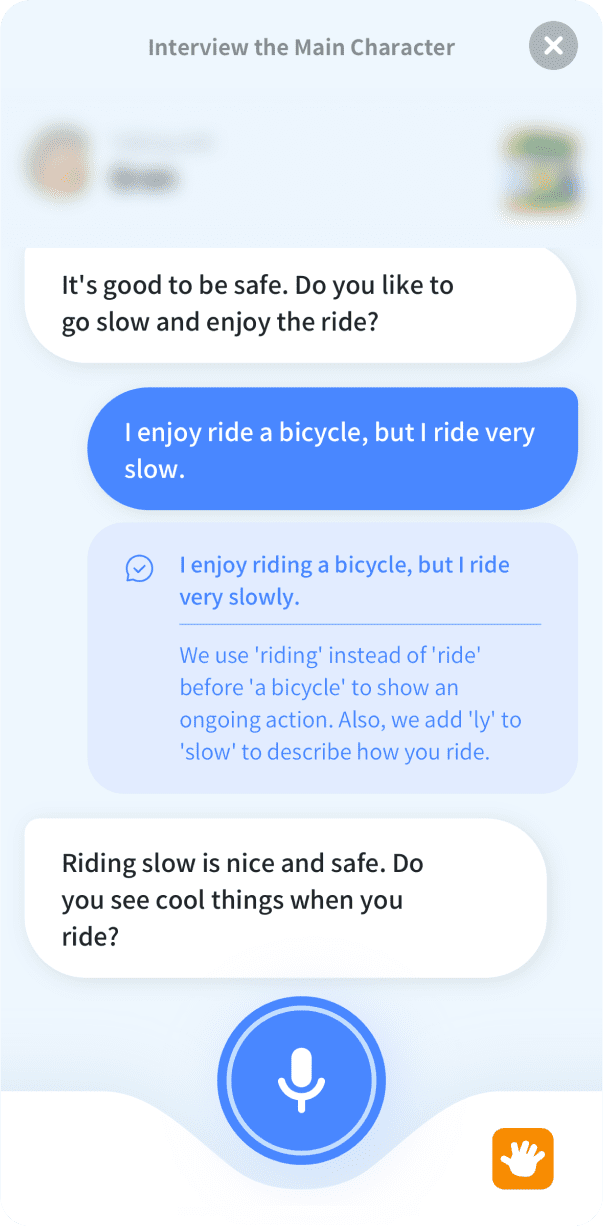
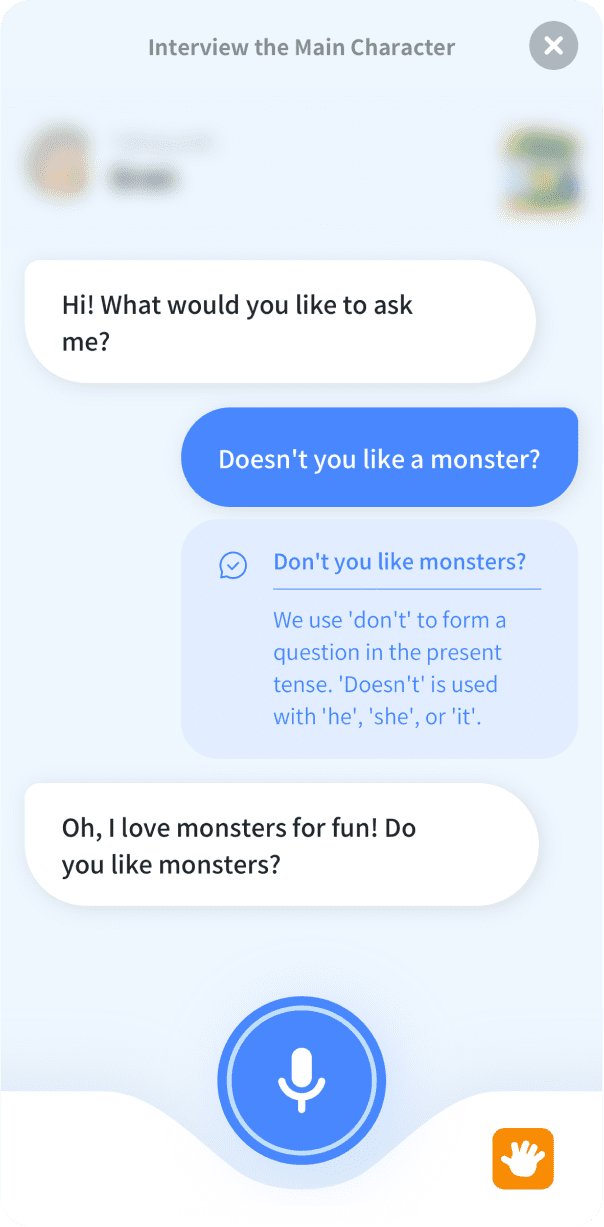
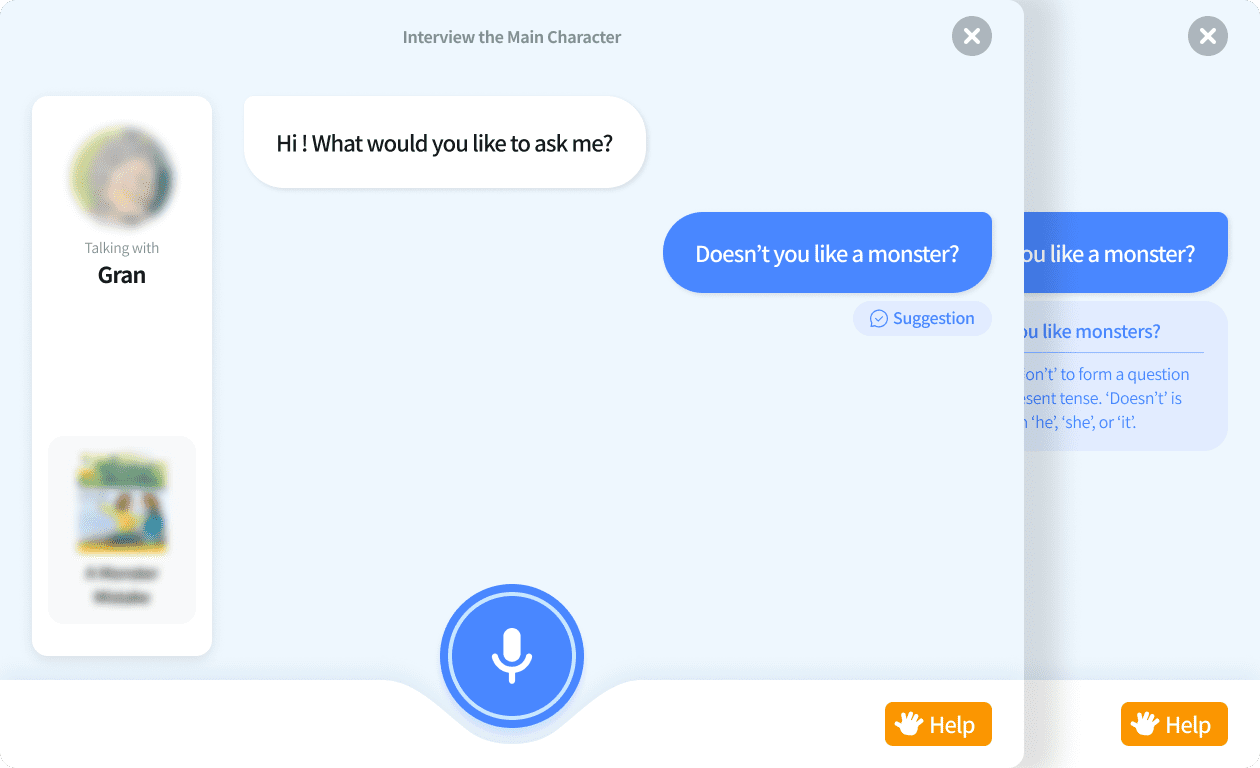
Internally, there was a recognition of the need to enhance the product's competitiveness based on the business context. LAURA includes various activities, some of which involve conversing with LAURA, which provides feedback on the user’s grammatical errors. However, in certain free conversation activities, grammatical errors are not corrected as they are perceived as part of a single ongoing conversation. This results in users having difficulty receiving feedback, and parents or teachers must correct grammatical errors, which is not always feasible immediately. Based on these issues, the goal to add a grammar correction feature was established. Based on this goal, we derived conclusions through competitor research and hypotheses about interaction methods. Users should be able to see grammar correction feedback in free conversation activities without necessarily involving teachers or parents. They should also have the option to choose whether to view the feedback or not. This approach aims to avoid disrupting user motivation and allows users to focus more effectively on their English learning.
Responsibility
Creating Impact from an Agreed Starting Point
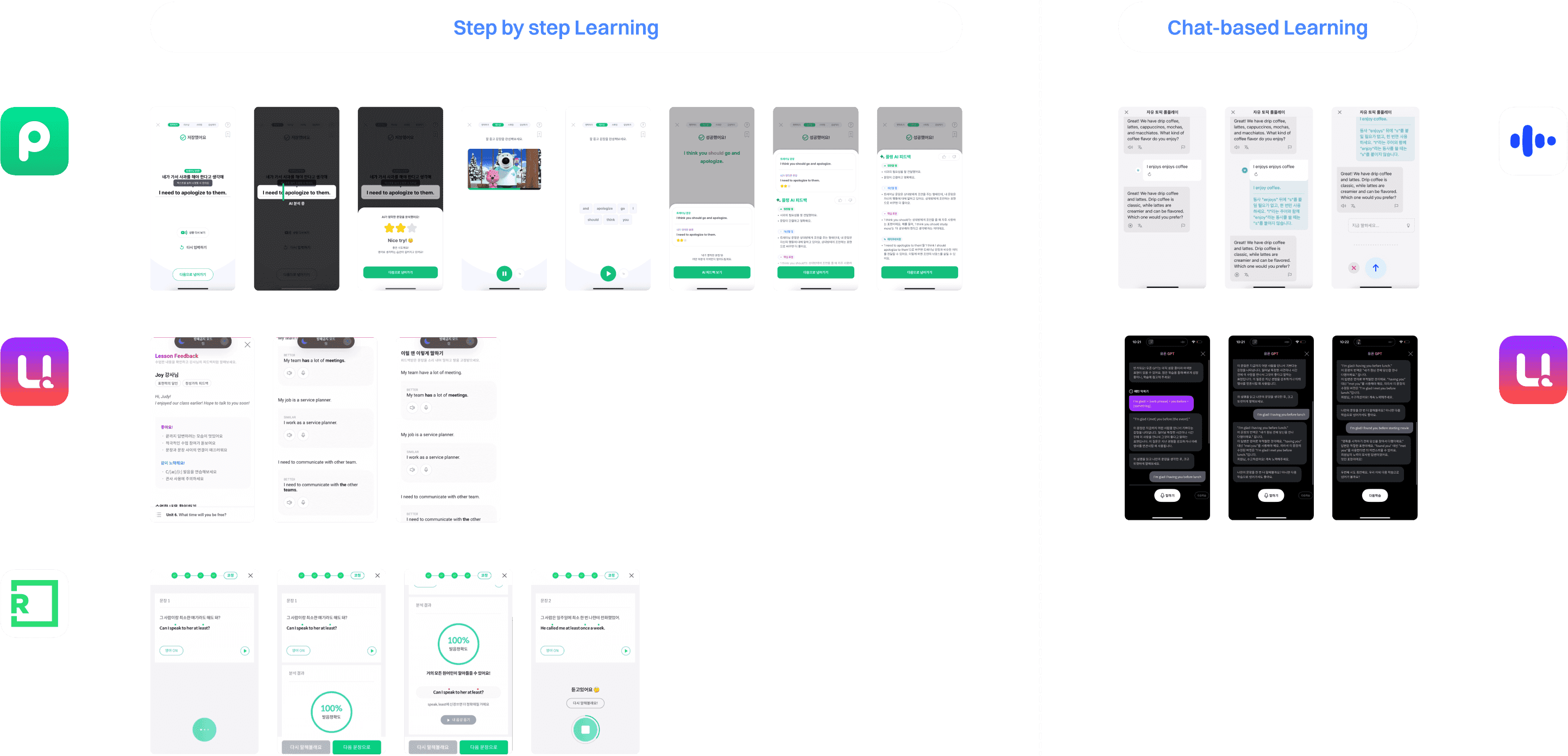
Through competitive research, we identified that grammar correction features were offered in various forms by other companies. The design direction could vary depending on the depth of the grammar feedback provided. However, during our kickoff meeting, we had reached a clear consensus that the feature should be implemented within the chat screen and presented in a simple, user-friendly manner. This provided a well-defined starting point for my work, which I continuously developed and guided towards consensus.
Establishing Criteria in the Design Process
One challenge was determining the label name for the grammar correction button. Since our internal UX writing standards were almost nonexistent, I created two guidelines, combining them with our project goals. Additionally, the amount of grammar feedback needed to be limited within the prompt. I led mobile testing, focusing on the smallest devices, and successfully derived the final results.
Existing Users
With the framework we developed, users were able to study English much more efficiently using LAURA. However, as seen from the User Test results of LAURA version 1, when children used LAURA and engaged in conversations without the help of parents or teachers, they experienced discomfort due to the lack of feedback.
Unawareness of Errors
Many users fail to recognize grammatical mistakes during speaking activities. In activities like 'Sentence Practice' or 'Quiz', which involve review tasks, LAURA directly corrects the user's speech when it's grammatically incorrect. However, in open speech activities such as 'Roleplay' or 'Interview the Main Character', users find it difficult to receive feedback even if they speak with grammatical errors. This lack of awareness limits their opportunity to correct mistakes and learn effectively.
Dependence on External Help
Without immediate feedback, users had to rely on teachers or parents to point out their errors. This dependency slowed down the learning process and reduced opportunities for independent correction.
Inconsistent Learning
Since users didn't always receive timely or actionable feedback, they struggled to apply the grammar rules they had learned during real conversations, creating a disconnect between learning and practical use.
Problems
Lack of User Feedback
Users often fail to recognize grammatical mistakes during speaking activities. Due to insufficient feedback, opportunities to correct these errors are limited.
Issue of Immediate Grammar Correction
There is a lack of methods for users to receive instant feedback when they make mistakes. They often rely on assistance from teachers or parents. However, users would benefit more from real-time correction to improve their learning effectively.
Problem of Learning Burden
Existing grammar correction methods are often complicated or require detailed explanations, which can feel burdensome for users. A simple and intuitive correction method based on their current response is needed.
Gap Between Learning Goals and Real-World Application
Although users learn grammar, they often struggle to apply that knowledge effectively in real conversations. A feedback system is required to bridge this gap and enhance their practical language use.
Disruption of Conversation Flow
When users make grammatical errors in their speech, the conversation with LAURA may not proceed smoothly, or error messages may be displayed. This issue also contributes to the problem.
Project Goals
Provide Immediate Feedback
Offer real-time feedback to ensure smooth and effective conversations for users.
Enhance User Motivation
Increase user motivation and encourage continuous engagement with the learning process.
Advance Grammar Correction Features
Elevate LAURA’s grammar correction functionality to maximize learning effectiveness and improve the quality of the product.
Impact
Since the grammar correction feature was not applied to all activities, I closely monitored the usage frequency of activities where this feature was enabled. To assess whether users were re-engaging with the feature, I tracked the increase in the average number of utterances following the use of the grammar correction function. We also considered the usage frequency of active users as a key metric in assessing our primary goal of reducing a decline in learning motivation.
Activity Execution Frequency
Average Utterance Count
Usage Frequency of Active Users (11+ uses)