Enhancing viewer tools in Oxford Learner's Bookshelf
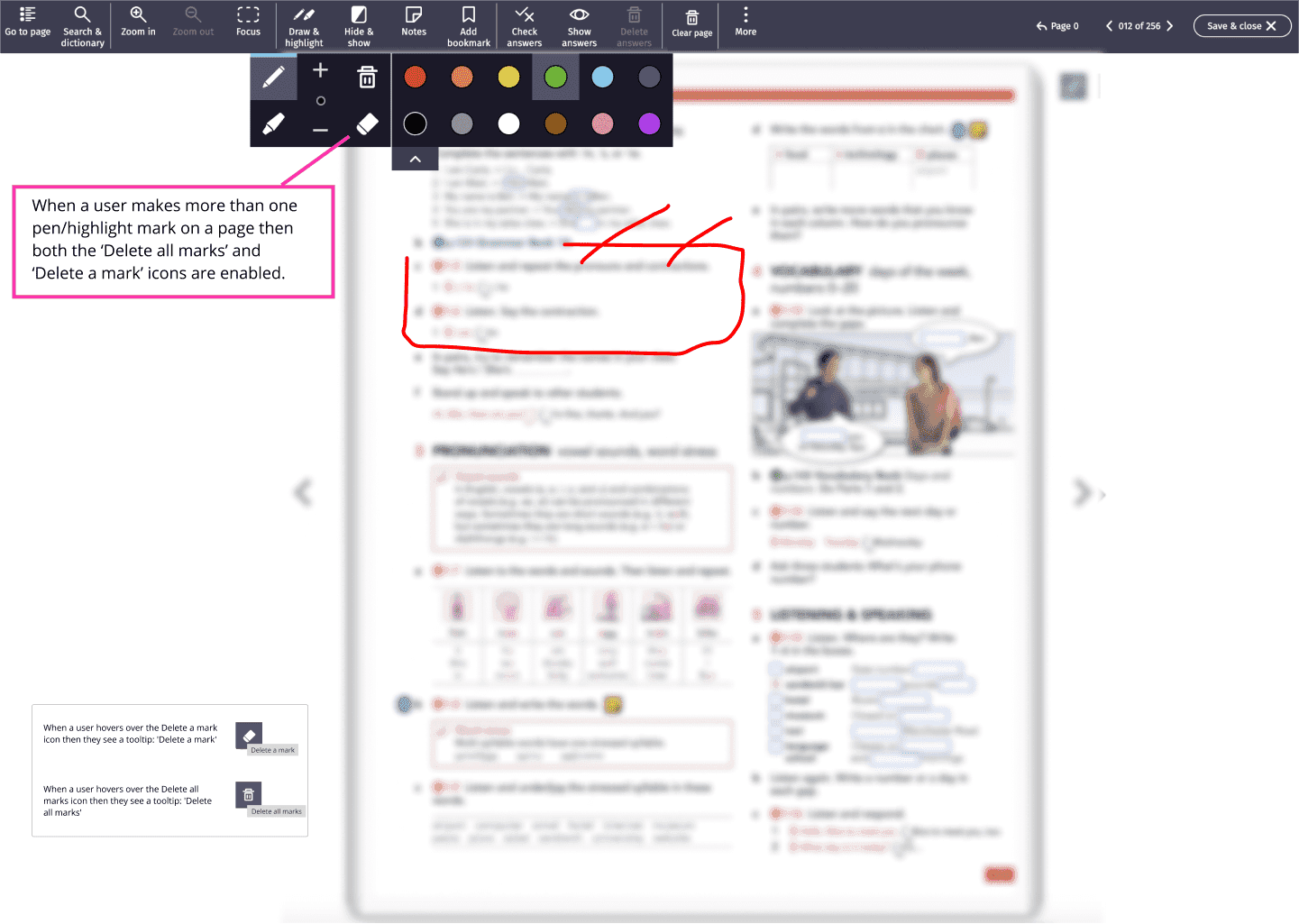
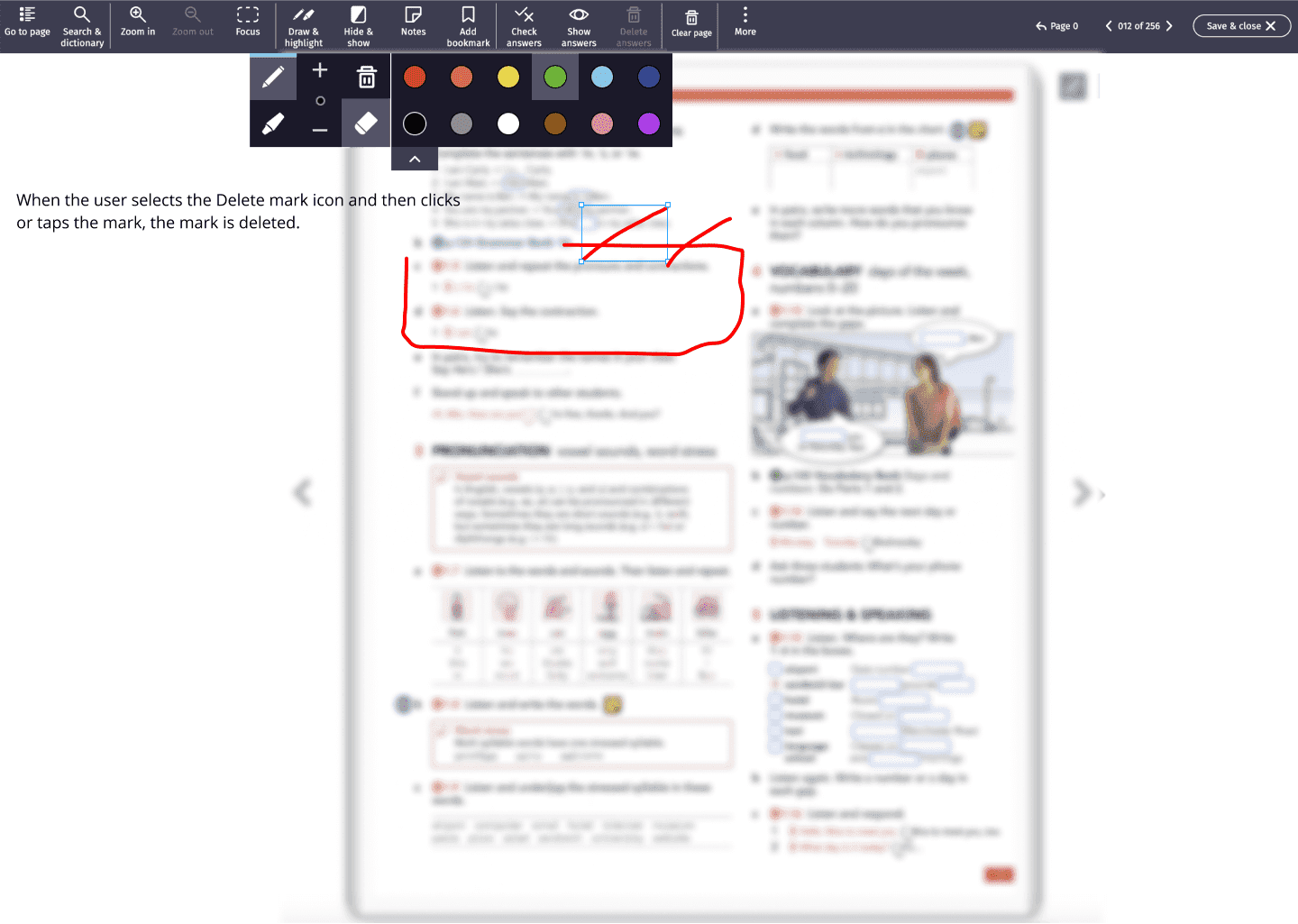
DELETE A MARK
Summary
As a product designer for Oxford Learner’s Bookshelf—a platform that allows students, teachers, and educational institutions worldwide to view and teach using Oxford University Press books—I encountered an issue with the pen tool feature. Oxford University Press, in partnership with iPortfolio, provided a wireframe to address the problem. However, I needed clear ‘Basis’ to support the proposed solution. Based on that basis, I was able to implement further improvements.
Responsibility
Revalidating Wireframes with Evidence
Given that this project involved significant changes in usability for the users, we already had wireframes in place, but I initiated a process to revalidate them. By revisiting research and reassessing the problem space during the improvement process, we were able to uncover key insights into the core of the interactions.
Proposing Better UI Solutions
As the lead designer for OLB, one of my key responsibilities was to assess whether the UI defined in the wireframes was truly optimal or if better alternatives existed. By proposing and advocating for UI solutions backed by clear evidence, I was able to achieve successful outcomes.
Impact
Revalidating Wireframes with Evidence
To ensure that users were not experiencing negative reactions to the usability changes and that the frequency of actions remained stable, we closely examined the frequency of behaviors such as drawing, highlighting, and erasing. It was important to track how often these behaviors occurred, as well as monitor the frequency of unintended actions, such as abnormal repetition of drawing and erasing, and any reported bugs or error rates.
Behavior Frequency
Error Rate